Among the countless Huaiyang cuisine specialties, braised lion head stands out as one of the most beloved and household favorites. This plump, hearty meatball may look plain and homely, yet it carries a time-honored story spanning over a millennium. Evolving from an imperial court delicacy to a folksy staple, it has become a legendary Chinese dish symbolizing reunion and perfection for feasts and gatherings.
The prototype of lion head dates back to the Sui Dynasty, with its origin closely tied to Emperor Yang of Sui’s southern inspection tour. During the Daye reign of the Sui Dynasty, the country enjoyed peace and prosperity. Having heard of the breathtaking scenery and abundant natural resources of Yangzhou, Emperor Yang led his civil and military officials on a southern cruise to admire the landscapes of the Jiangnan region. Local officials spared no effort to cater to the emperor, gathering rare delicacies from all over the nation. Famous chefs flocked to Yangzhou to showcase their culinary skills, giving rise to a prosperous era of Jiangnan cuisine.
One day, while boating on the Slender West Lake, the emperor was enchanted by the weeping willows, scattered pavilions, rippling blue waves and exotic rockeries along the bank. He suddenly ordered his royal chefs to create an unprecedented dish with exquisite taste and elegant shape. After much deliberation and trial, the chefs selected fresh pork belly with perfect fat-to-lean ratio. They chopped the meat manually instead of mincing it mechanically, preserving its natural texture. Seasoned with ginger-scallion water, egg white and starch, the meat was repeatedly beaten to build elasticity, then kneaded into full, round meatballs and simmered slowly over gentle heat after preliminary pan-frying.
The finished meatballs boasted a mild, glossy complexion and a plump shape, with a firm yet tender outer layer and juicy, fluffy interior. Served in a celadon plate, they resembled strange stones in the lake and also looked like the head of an auspicious lion. The emperor was full of praise after tasting it. Amid the prosperous age, the lion, an auspicious mythical beast in Chinese culture that symbolizes good fortune and majesty, inspired the emperor to bestow the official name "Lion Head" on the dish. In its early days, the dish was stewed in clear soup with a fresh and mild taste, exclusively served in imperial banquets and inaccessible to common people.
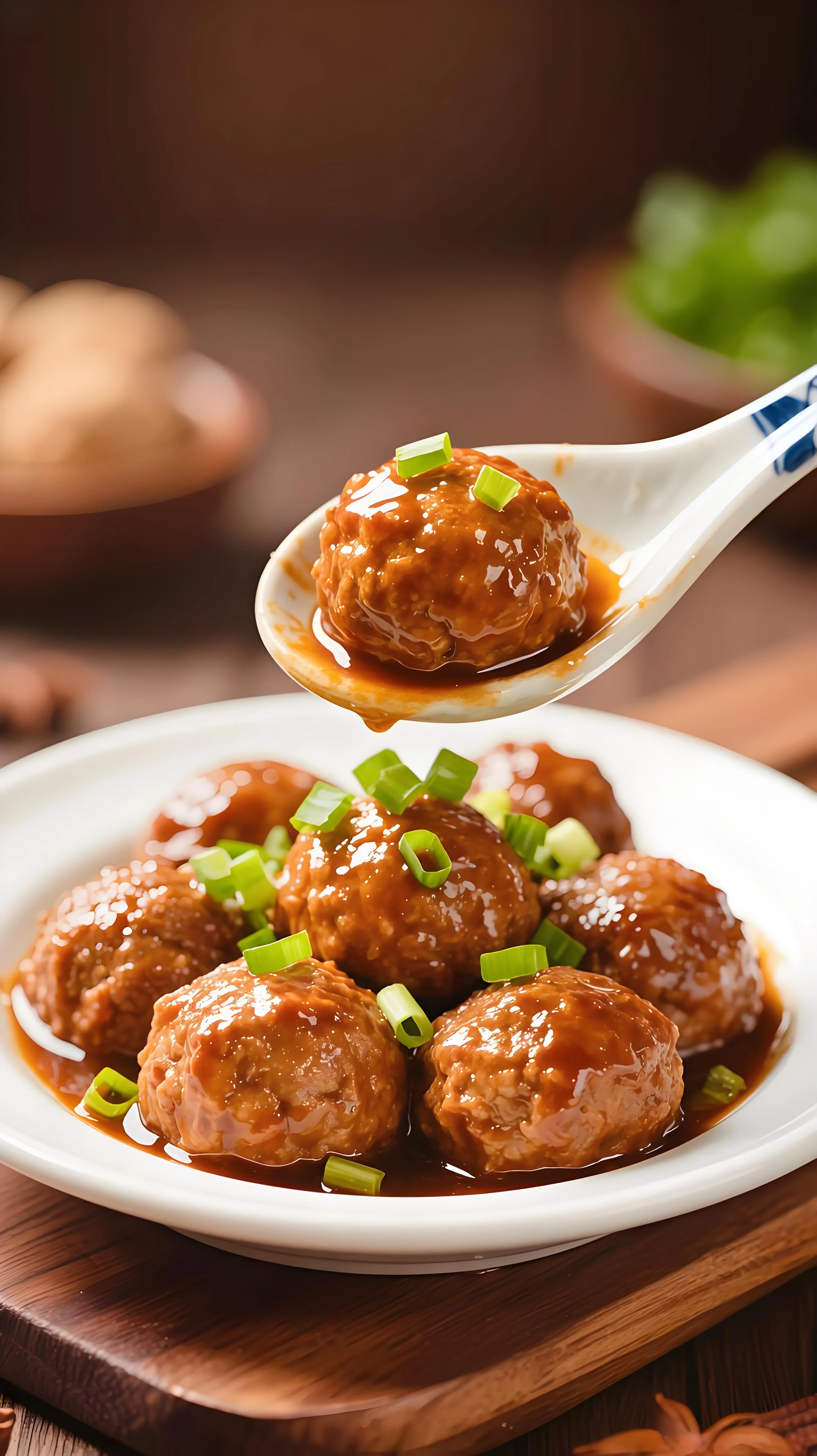
It was a folk tale in the early Tang Dynasty that transformed the plain stewed lion head into the world-famous braised version and rooted it among ordinary people. In early Tang Dynasty, there lived a virtuous and benevolent squire in Yangzhou. He was always ready to help neighbors and relieve the poor, hosting feasts for villagers every festival. His family employed a highly skilled elderly female chef, who fully understood the squire’s kindness and knew that folk people preferred rich and mellow flavors over light tastes.
By then, the imperial recipe of stewed lion head had spread among the people, yet its mild taste failed to satisfy public taste buds. To create a richer flavor, a more appealing color and make the dish more suitable for feasts and longer preservation, the chef boldly improved the cooking method. She pan-fried the shaped meatballs first to lock in the juice, then braised them slowly over low heat with dark soy sauce, rock sugar, star anise, cinnamon and bone broth.
After an hour of slow braising, the meatballs fully absorbed the savory sauce, turning bright reddish-brown and aromatic. They tasted fatty yet not greasy, tender yet well-shaped, with a perfect balance of saltiness and sweetness and a lingering aftertaste. As soon as the improved dish was served, the whole room was filled with tempting fragrance, winning unanimous praise from all guests. The braised meatballs, ruddy, plump and powerful-looking, bore a closer resemblance to the head of a sacred lion than the stewed version, thus people officially named it "braised lion head".
From then on, braised lion head was no longer an exclusive imperial delicacy but thoroughly settled in ordinary families. Over thousands of years, people have endowed this dish with beautiful implications: its round shape represents family reunion and flawless happiness; the lion symbol wards off evil spirits and brings peace and good luck; its rich taste stands for prosperous life and warm blessings.
During the Ming and Qing dynasties, Huaiyang cuisine reached its peak. Braised lion head was officially listed as a classic Huaiyang dish, becoming an indispensable centerpiece for state banquets, family dinners and wedding feasts. Whether in imperial gatherings, scholar-official banquets or ordinary people’s festival dinners, a steaming plate of braised lion head always adds warmth and festivity to the table.
After thousands of years of evolution, the cooking technique of braised lion head has become more mature and refined. People still adhere to the ancient craftsmanship of manual chopping, repeated kneading and slow braising, rejecting impetuous and quick-made shortcuts. Without the extravagance of rare delicacies, it possesses the most heartwarming mortal flavor. Bearing Chinese people’s best wishes for reunion, prosperity and peace, this dish has been passing down from the Sui Dynasty royal kitchen to the present day, remaining an enduring and beloved traditional Chinese delicacy for all ages.